
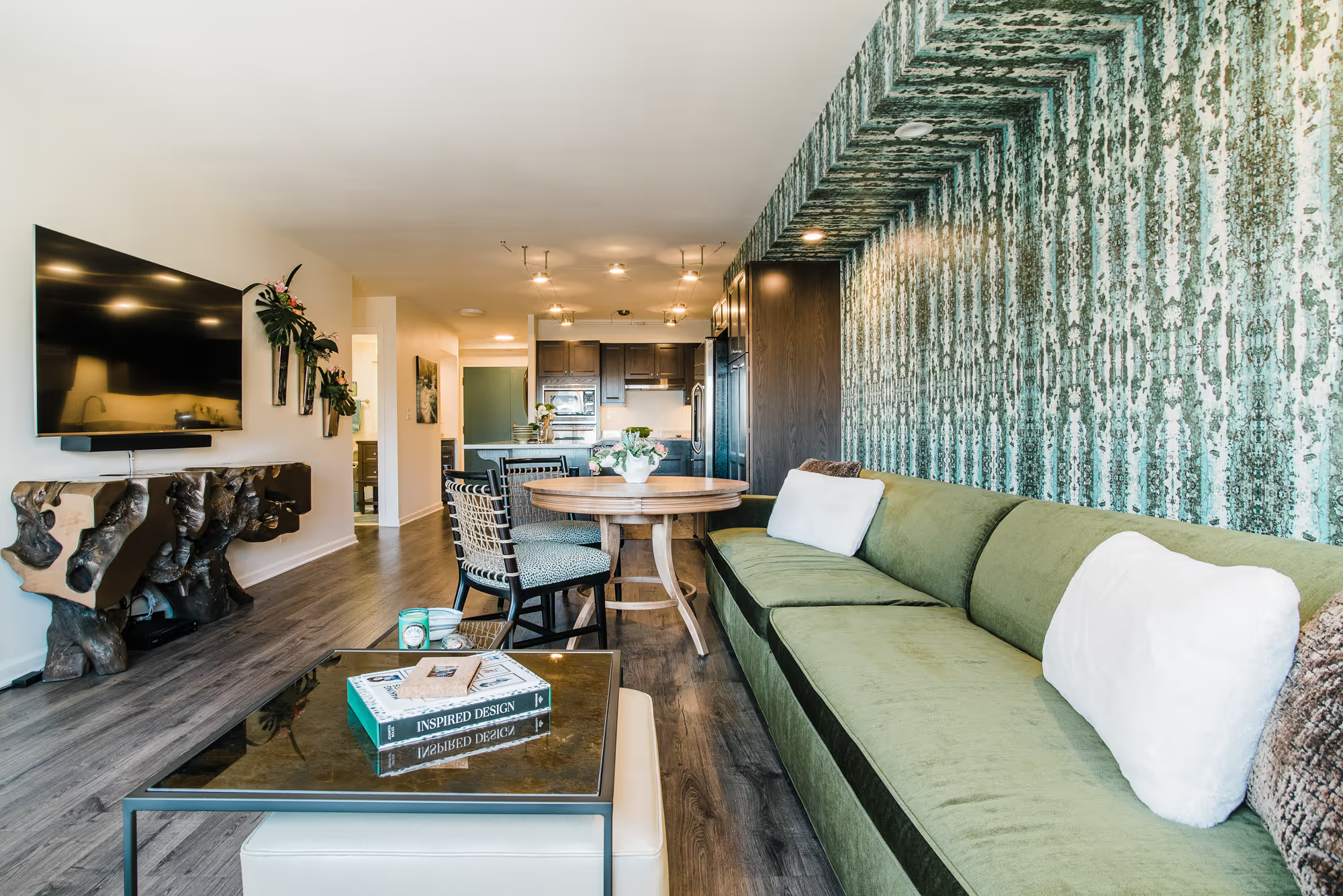

It's one of the first questions I hear, and one of the hardest to answer with a single number. Two homes with the same square footage can land in completely different places depending on how each room is used, what's staying, which pieces need to perform every single day, and where the market is when you're buying. If you’d like a head start on the numbers, my Interior Design Investment Guide breaks down pricing room by room.
What I can give you is a clear picture of what shapes the investment and where it actually goes. Once you understand those factors, the numbers start to make sense, and you can plan with clarity instead of guesswork.
Square footage is where most people start, and it's one of the least reliable predictors of the final number. A compact condo with floor-to-ceiling windows and a custom sectional can easily outpace a larger home that's keeping half of its existing furniture. What really drives the investment:
To give you a general sense of scale, furnishing a single main living space with quality, designer-sourced pieces often falls somewhere between $35,000 and $75,000 or more before delivery and installation, depending on the furnishings, materials, and level of customization you choose. For a whole home, the investment scales with the number of rooms and how completely each one is furnished.
Rather than starting with a per-square-foot figure, I recommend starting with the overall number you're comfortable investing, then building in a buffer. Projects almost always uncover opportunities, or necessary updates, as they evolve.
From there, allocate intentionally. A general guideline I share with clients:
And if the full picture isn't right for this year, phase it. Well-designed homes are rarely finished all at once. Start with the rooms you use most, then build outward.
There's no single price for a sofa or a dining table. What a piece costs depends on its materials, construction, and level of customization, and every client's priorities are different, so two homes can land in very different places for the same room. In my guide, I group furnishings into three tiers, baseline, elevated, and luxe, and the differences between them come down to a few key factors.

On the retail side, there's a wide spectrum. Entry-level pieces are built for lighter use, mid-range retail offers better materials and more options, and high-end retail brings premium materials and larger scale. Trade-level pieces, sourced through designers, go a step further in construction and customization.
Most people budget for the sofa and forget everything around it. A complete living room includes seating, a coffee table, side tables, a rug, lamps, window treatments, art, and pillows, and each of those carries its own investment. Put them together, and the total for a single room often surprises people, especially before delivery and installation are factored in.
Not every piece in your home needs to be the most expensive version of itself. But some pieces absolutely earn it. My rule of thumb: invest most in what you sit on, touch, and use every day.
In living and dining rooms, that means seating (sofas, sectionals, and dining chairs), tables, and the primary materials: upholstery, wood, and finishes. These pieces see more daily wear than almost anything else in the home. In bedrooms, it means the mattress, the bed, and storage.

Better furniture isn't just a different look. You're paying for:
That doesn't mean every piece needs to sit at the top of the range. Lower cost doesn't automatically mean lower quality, and I often mix investment pieces with more moderately priced ones within the same home. The key is choosing the right level of quality and investment for how each piece will be used. A sofa your family sinks into every evening has a very different job than an accent chair in a guest room or a console that's mostly decorative, and the investment should reflect that.
Many of the pieces I source are trade-level, built with a focus on construction and long-term use rather than mass production. That matters most for:
Where can you be more selective? Rooms you use occasionally, like a guest room or a media space you visit a few times a month, and smaller accessories that can be added over time. That balance is what keeps an investment intentional instead of stretched thin.
This is where most furnishing plans quietly fall apart. The sofa and dining table get budgeted. The layers that make a room feel finished, and the logistics of getting everything into your home, often don't.

Window treatments can be one of the elements that makes a room feel finished, while also managing light, privacy, and sound. That said, they aren't always necessary. In a high-rise where the view is the main feature, or where the building already provides shades, a minimal approach may be the right one. When they are part of the plan, off-the-shelf panels come in standard sizes with limited fabrics, while custom workroom drapery is made to your exact height and width, with proper fullness, lining, and hardware scaled to the window. The difference in investment is real, and so is the difference in the room.
The most common misstep I see: buying 84-inch panels for 9-foot ceilings because they seem close enough. They hang short, and the room immediately feels smaller. Ceiling-height drapery with proper fullness does the opposite, making ceilings feel taller and windows feel wider.
Most rooms that feel off are relying on one overhead light. A layered plan that combines ambient, task, and accent lighting takes more investment than a single fixture, but it's what gives a room depth and flexibility. Remember to plan for installation as well as the fixtures themselves, including sconces, recessed lighting, and dimmers and controls.
Art, mirrors, pillows, throws, and bedding are what make a home feel complete, not just furnished. Individually, they can seem small, but across a whole home they add up quickly, and they're often the first thing to get squeezed when the rest of the plan runs over.
These are the costs almost nobody plans for, and they can become a meaningful share of the total investment:
Knowing about these costs upfront is the difference between a smooth installation and an unwelcome surprise.
Here's a quick exercise from my guide. Visit a high-end retail website and build a shopping cart for one complete room: sofa, chairs, rug, coffee table, lighting, side tables, and accessories. Don't overthink it. That total is a realistic picture of what it takes to furnish one room at a high level. Now imagine making every one of those decisions without knowing whether each piece fits, scales correctly, or works with everything around it.
That's the part a designer changes. The value isn't in spending more. It's in spending with intention:
I also work with trade vendors and custom workrooms that aren't available to the general public, which means better construction and more control over sizing and finish than retail typically offers. Through my Home Furnishings & Finishes service, I handle sourcing, ordering, tracking, and installation, so you make the key decisions and I take care of the rest.
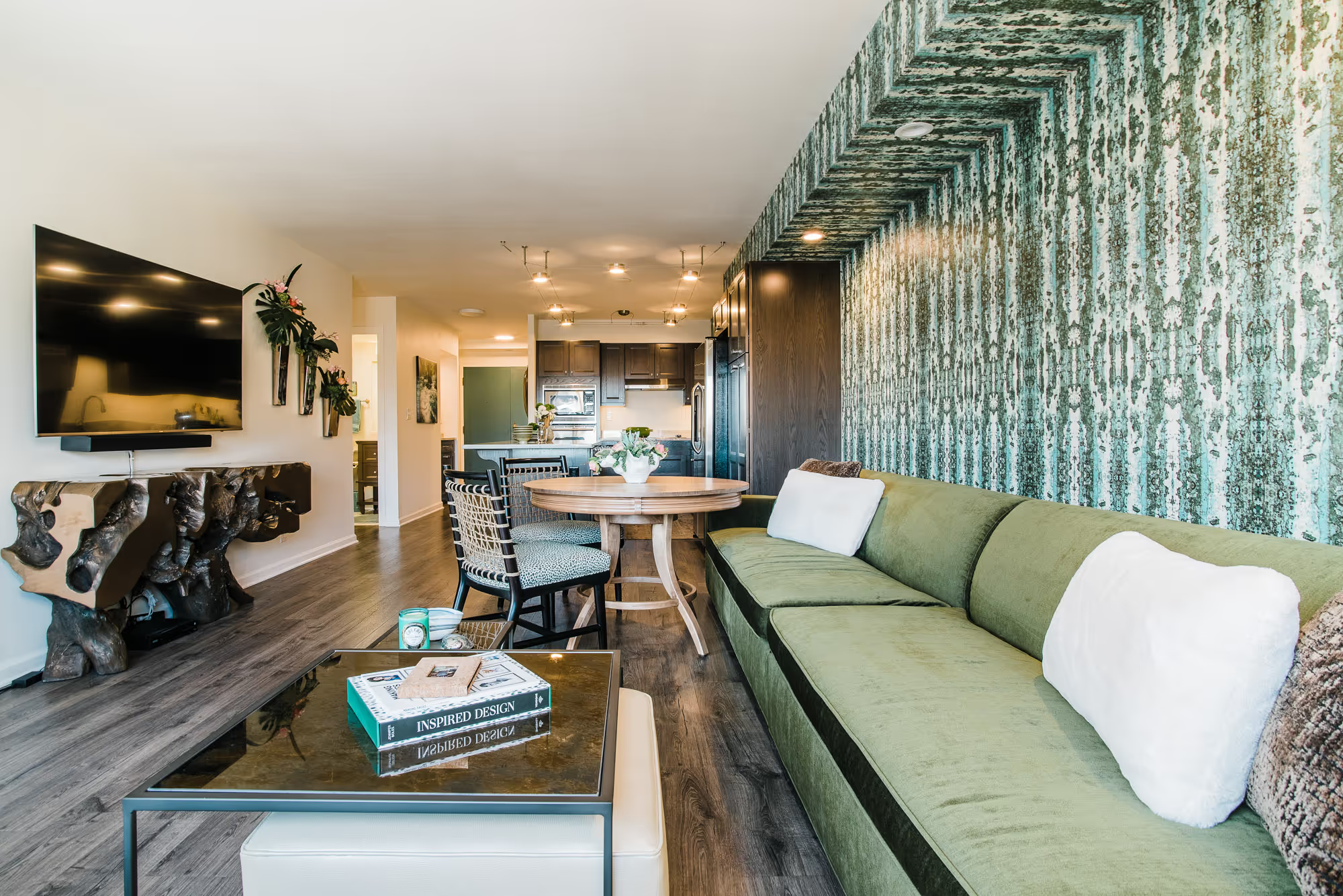
Most of my work happens in Denver's high-rise condos and in second homes across Colorado. Both come with furnishing considerations a typical house doesn't, and they shape the investment in ways that are easy to miss.
Open floor plans leave nowhere to hide an oversized sectional or a dining table that crowds the walkway. In a condo, every piece has to earn its footprint. Before anything is ordered, I plan the full layout with measured drawings, so we know what will work in the room and what will actually make it through the door.
High-rise delivery is its own project. Pieces usually need to be scheduled through a freight elevator during specific windows, and large items like sofas and headboards have to clear the elevator, hallways, and doorways. It's one of the reasons receiving and staging matter so much: one coordinated installation is far more efficient than a dozen separate deliveries competing for elevator time. I've written more about building logistics in Can You Remodel a High-Rise Condo?

Floor-to-ceiling glass is one of the best parts of high-rise living, and often one of the largest furnishing line items. Large window walls typically need layered treatments that manage glare, heat, privacy, and sound while still honoring the view. It's rarely a place I recommend saving.
Many Denver high-rises are built with concrete ceilings, which can limit where new overhead fixtures can go. That makes layered lighting through lamps, sconces, and well-placed decorative fixtures even more important, and worth planning before furniture is ordered.
For a mountain home or a lock-and-leave city condo, the goal is usually a home that's fully ready the moment you arrive. That often means furnishing more completely at once, down to bedding, towels, and accessories, and relying on receiving, storage, and a single coordinated install since you may not be there for each delivery. Mountain projects also tend to run higher than Denver metro projects, so plan with that in mind.
The homes that feel best are the ones where every decision was made in the context of the whole, and that doesn't always mean starting from scratch. In one condo project, the owner had inherited a home full of furnishings that had been moved in without much thought to function. We rearranged and edited what was there, and the new investment was limited to area rugs, bar stools for the island, pillows, accent paint, and styling. In a Poncha Springs home, custom window treatments, area rugs, and decorative lighting finished the space, and reupholstering inherited family pieces made it deeply personal. Neither project started from zero. Both feel complete.

My Interior Design Investment Guide is where the numbers live. It includes room-by-room pricing ranges for living and dining rooms, bedrooms, home offices, window treatments, lighting, finishing layers, outdoor furnishings, and specialty labor, and it's the same framework I use with clients to have realistic conversations about what's possible within their investment.
Download the Interior Design Investment Guide
When you're ready to put a plan behind the numbers, my Home Furnishings & Finishes service covers everything from custom furniture and fabrics to curated décor, including integrating the pieces you already love. Book a Discovery Call and let's talk about your home.
Because every home and every client is different. The number of rooms, the level of quality and customization, what you already own, and current market conditions all shape the final investment. That's why I start with a conversation rather than a one-size-fits-all figure.
Build in a buffer for the unexpected, and plan for freight shipping, receiving and storage, professional installation, and haul-away of existing furniture. These behind-the-scenes costs are easy to overlook but can become a meaningful part of the total.
Either can work. Phasing lets you prioritize the rooms you use most and build outward over time. Second homes and lock-and-leave condos are often furnished more completely at once so the home is ready when you arrive.
Yes. Pieces worth keeping can be incorporated, rearranged, or reupholstered, which can significantly reduce the new investment. If something doesn't work, an honest assessment early saves money later.
It depends on the scope. The process starts with design: planning the layout, making selections, and refining them together. Once orders are placed, trade furniture, custom upholstery, and custom window treatments each have their own lead times, and every piece is received and inspected before a single coordinated installation. Even one room is usually a matter of months rather than weeks, and I'll share a realistic timeline once we've defined the scope of your project.
My Interior Design Investment Guide includes room-by-room pricing ranges across furnishings, window treatments, lighting, finishing layers, and labor. You can download it for free, and we can walk through what applies to your home on a discovery call.